


Description
Description
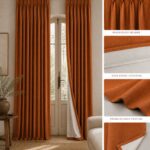
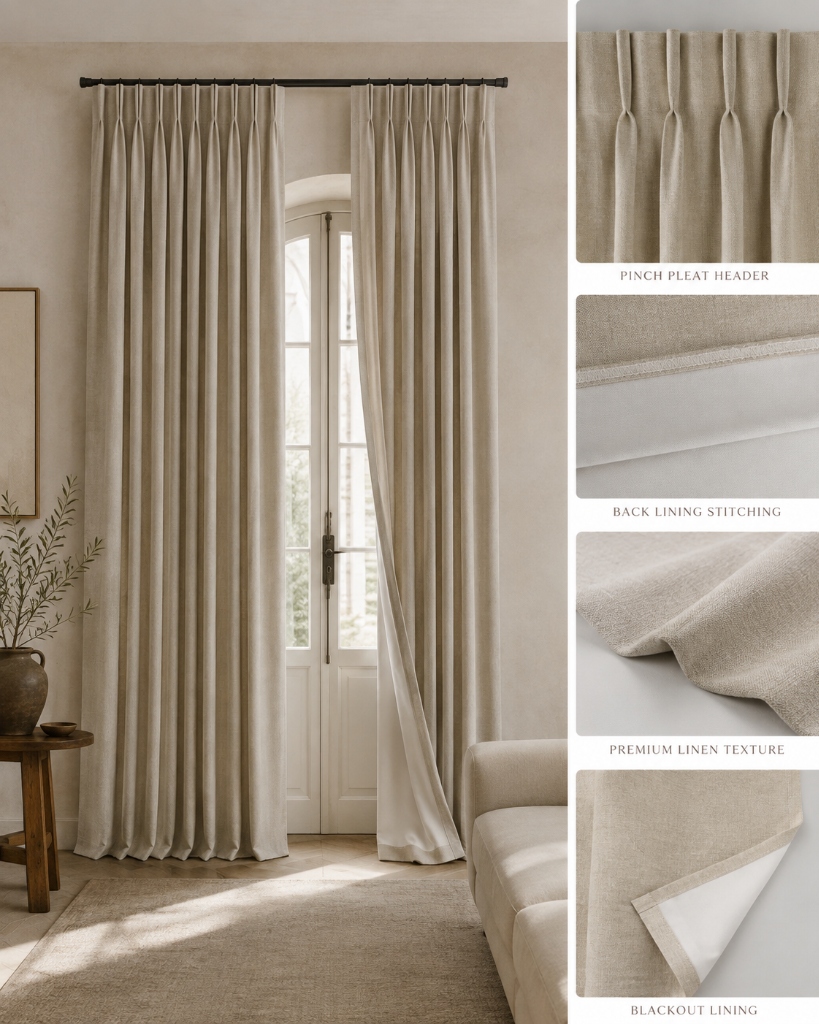
Thermal blackout curtains in 3-pass acrylic-foam coated cloth at 290 gsm, under 0.5% light transmission by spectrophotometer at 550 nm, with the foam layer carrying the R-value. Our thermal blackout curtains add roughly R-0.9 to a window assembly when installed to break the convection loop — and close to nothing when it hangs loose.
Every blackout curtain is already a thermal curtain
Every blackout curtain is a thermal curtain, because the thing that stops light is a dense coated or triple-woven layer that also stops air and radiant heat. Selling the two as separate products is a marketing convention rather than a material one. What genuinely varies is whether the curtain is installed in a way that lets the insulation work.
The convection loop: why installation matters more than cloth
The mechanism to understand is the convection loop. Warm room air touches the cold glass, cools, falls, runs out along the floor at the bottom of the curtain, and is replaced by more warm air drawn in over the top. A curtain hanging loose in front of a window does not stop that loop — it just gives the air a longer path. The heat still leaves.
Break the loop: three things that make thermal blackout curtains work
Break the loop and the same cloth performs completely differently. Seal the top with a cornice, a ceiling-mounted track or a curtain rod fitted tight to the ceiling; close the sides with return brackets so the panel touches the wall; and take the length to the floor or just past it. Do those three things and a thermal curtain adds roughly R-0.9 to the window assembly. Skip them and it adds close to nothing, whatever the label claims.
Cloth specifications
The cloth here is 3-pass acrylic-foam coated at 290 gsm, under 0.5% light transmission by spectrophotometer at 550 nm, with the foam layer carrying the insulating value. Hem is 2.5 in. double-turned with a chain weight to hold the panel against the wall rather than letting it billow.
Sizes and colours
Lengths 84, 96, 108 and 120 in., in grommet or rod pocket heading. Colours: Alabaster, Bone, Fog Grey, Sable, Ink, Clay, Sage, Indigo and Rust.
Thermal blackout curtains in summer
In summer the same panel works in reverse — a closed blackout curtain on a south-facing window keeps a room measurably cooler through an afternoon, which is the use most people discover second and value most.
Thermal blackout curtain size guide
| Drop | Where it works |
|---|---|
| 84 in. | Standard window, rod tight to ceiling |
| 96 in. | Floor-length on 8-ft ceiling |
| 108 in. | 9-ft ceiling, ceiling-mounted track |
| 120 in. | 10-ft ceiling, sealed with a cornice |
How to care for your thermal blackout curtains
- Machine wash cold on gentle
- Hang to dry — NEVER tumble (heat cracks the acrylic-foam coating)
- Iron only on the reverse of the face, cool
- Skip fabric softener — degrades the coating
Frequently asked questions
Do thermal blackout curtains actually save energy?
Yes — roughly R-0.9 added to the window assembly, but only if you break the convection loop: ceiling-mount, return brackets on the sides, hem to the floor.
What is the R-value of thermal blackout curtains?
About R-0.9 added to the window assembly when properly installed. Poorly installed (loose panel, gap at top), close to zero.
Do thermal blackout curtains work in summer too?
Yes — south-facing curtain closed through afternoon keeps a room measurably cooler. Same cloth, reversed use.
Can I tumble dry thermal blackout curtains?
Never — heat cracks the acrylic-foam coating. Hang to dry always.
Complete the winter window
Add a blackout curtain liner for a second convection barrier, layer with sheer curtains on an inner rail, and pair with a quilted throw.
Additional information
Additional information
| Style | Solid colour |
|---|
Reviews (0)
Reviews (0)
Size guide
Size guide
YOU MAY ALSO LIKE…
Thanksgiving Dinner Napkins
$49.99

Silk Bed Sheets Queen
$49.99
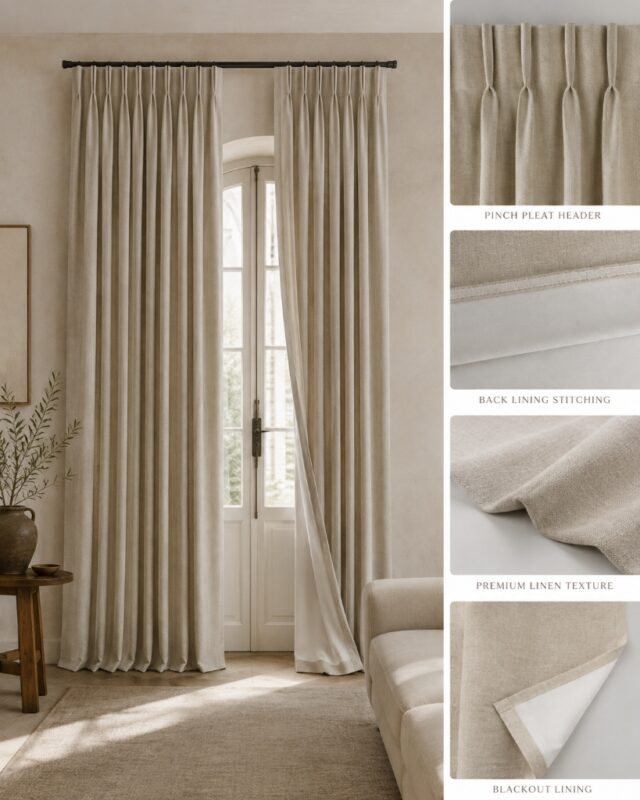
Thermal Blackout Curtains
$49.99
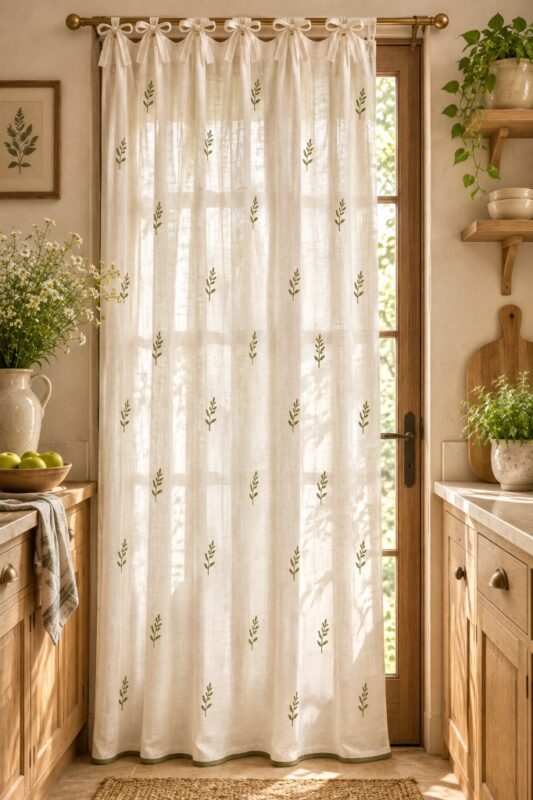
Embroidered Sheer Curtains
$49.99
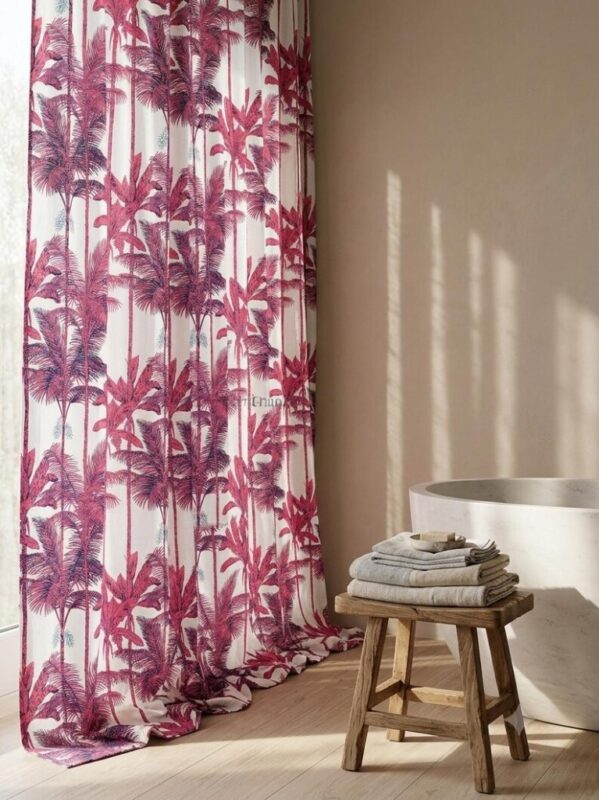
Hotel Shower Curtain
$49.99
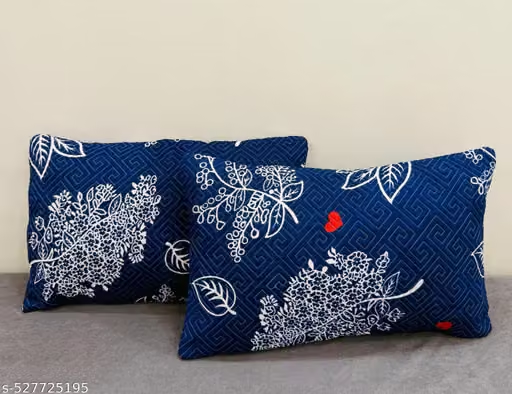
Embroidered Throw Pillows
$49.99
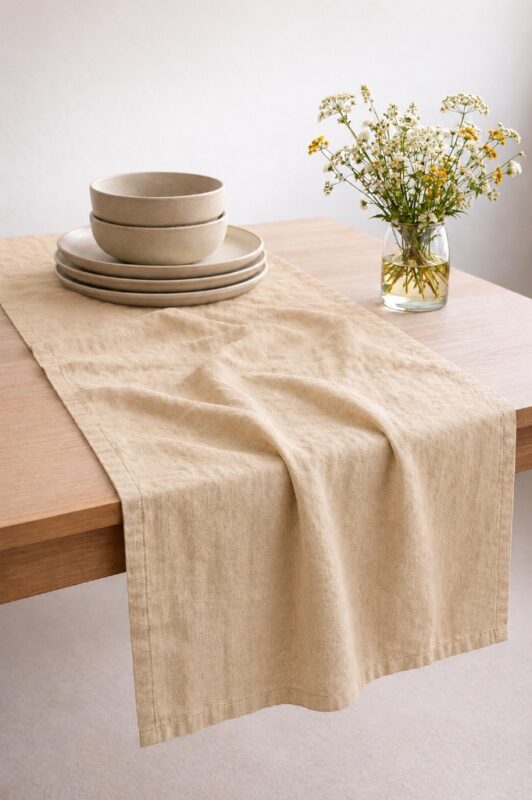
Natural Linen Table Runner
$49.99
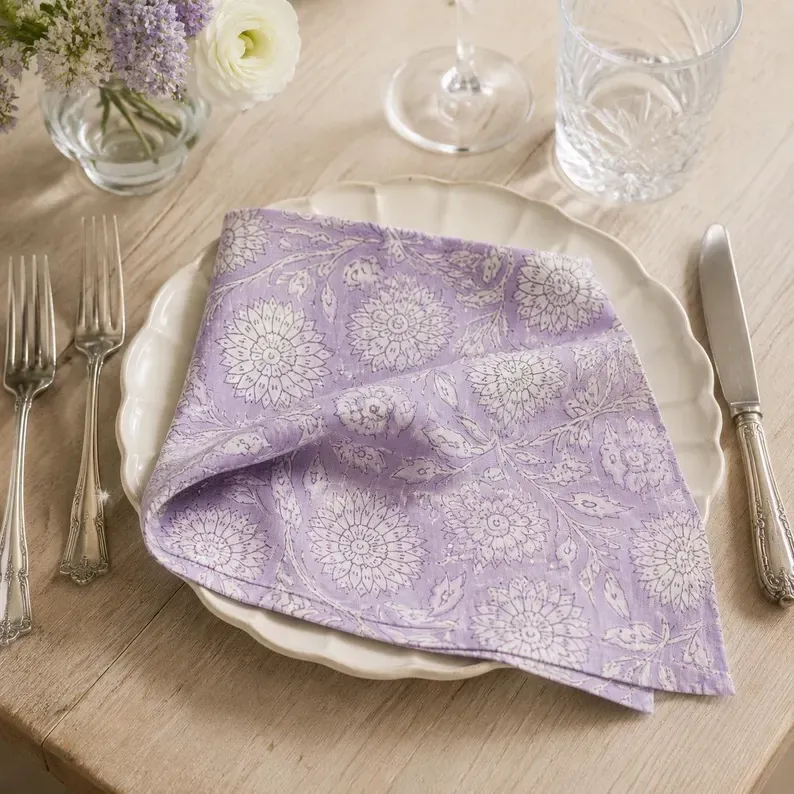
Baby Shower Napkins
$49.99
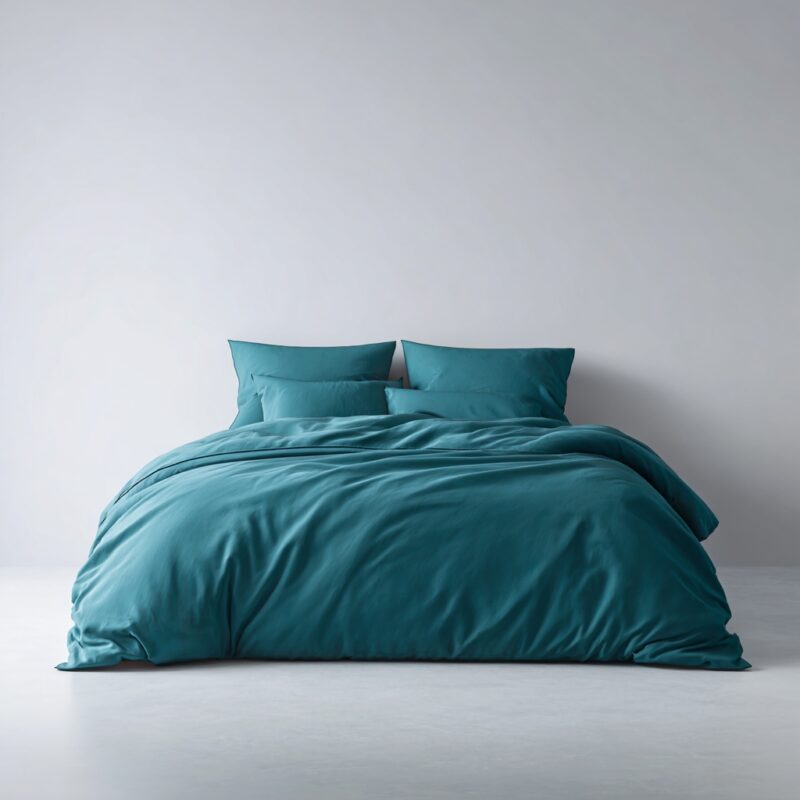
Alaskan King Bed Sheets
$49.99
Matelasse Bedspread
$49.99
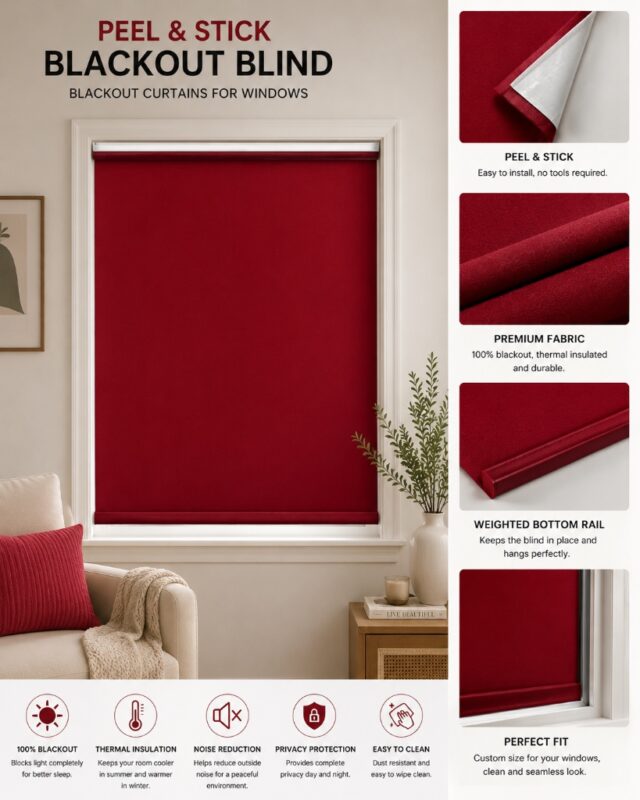
RELATED PRODUCTS
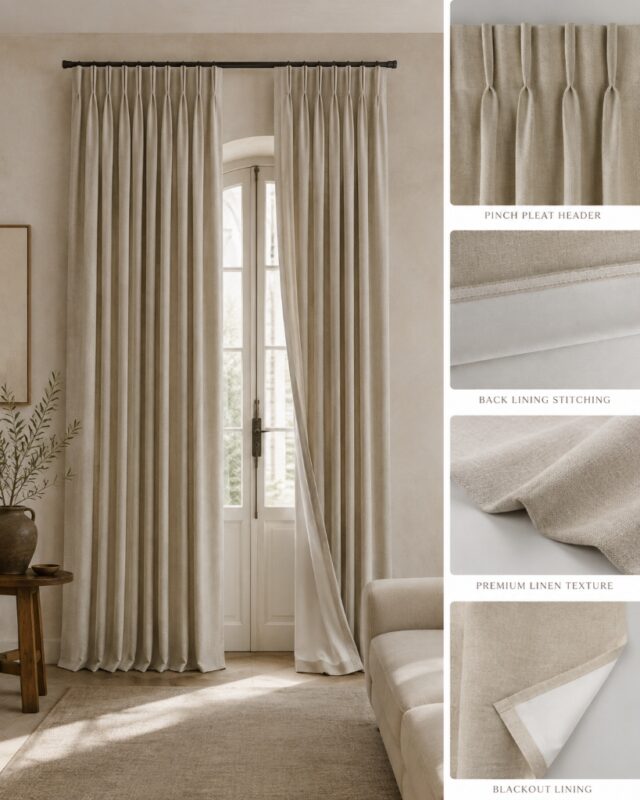
84 Inch Blackout Curtains
$49.99
Blackout Curtain Liner
$49.99
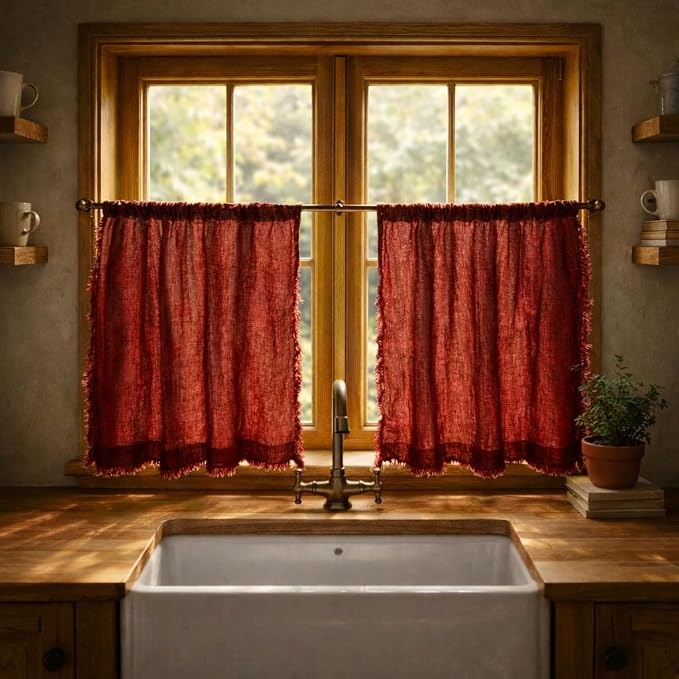
Cafe Curtains
$49.99
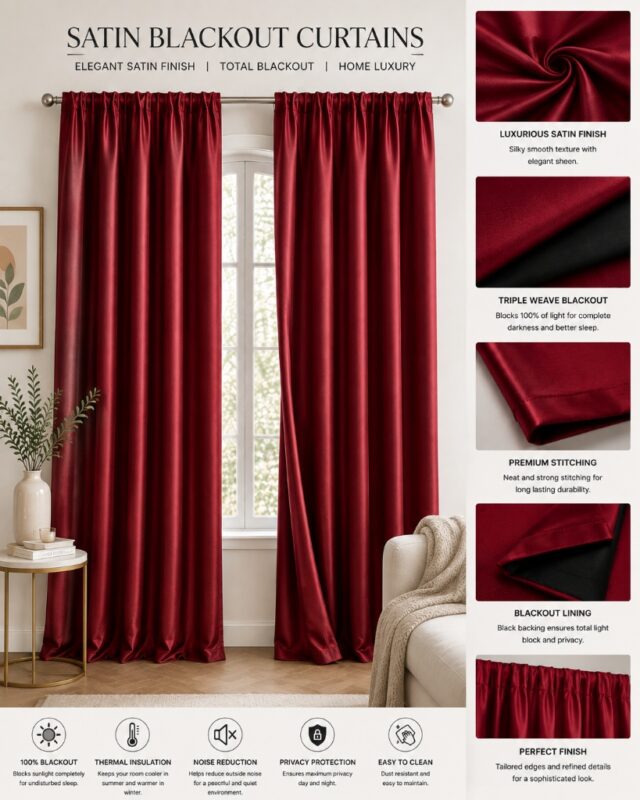
Faux Silk Blackout Curtains
$49.99
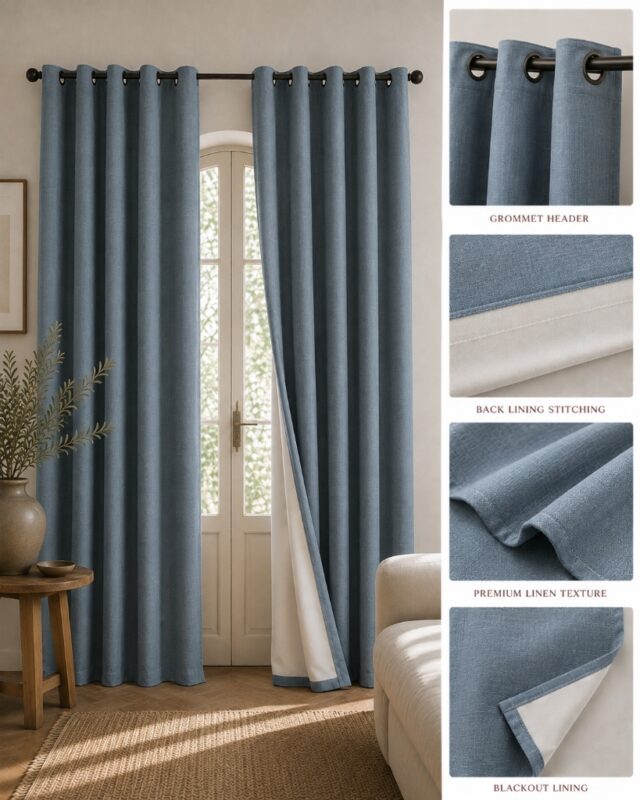
Grommet Blackout Curtains
$49.99
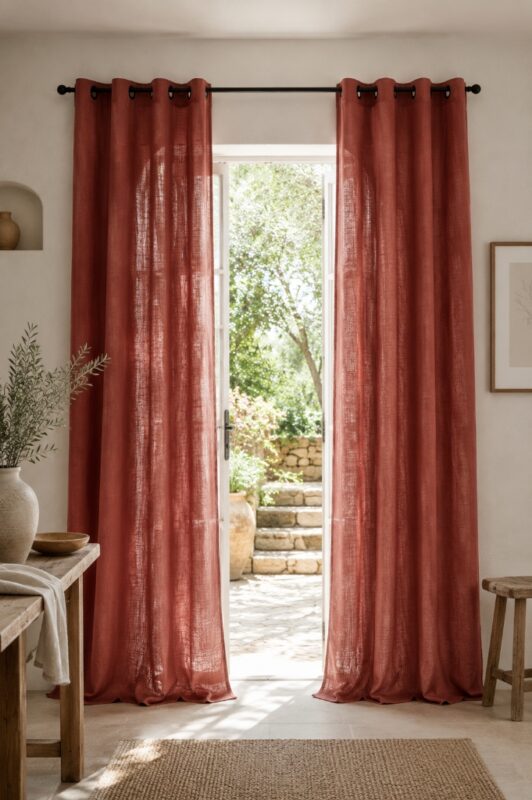
Linen Grommet Curtains
$49.99
Outdoor Patio Curtains
$49.99
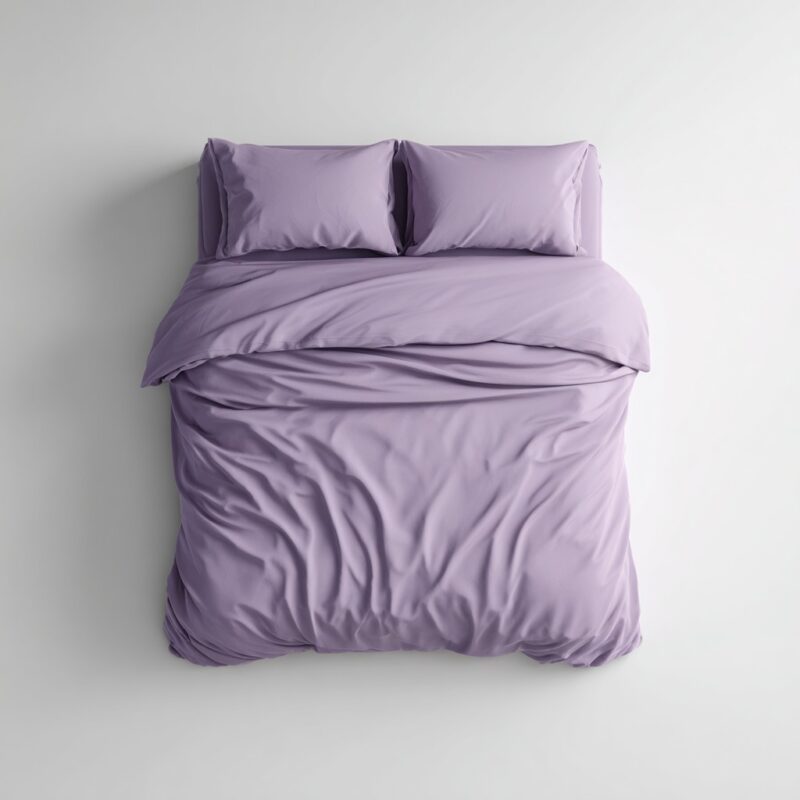
Purple Bed Sheets
$49.99
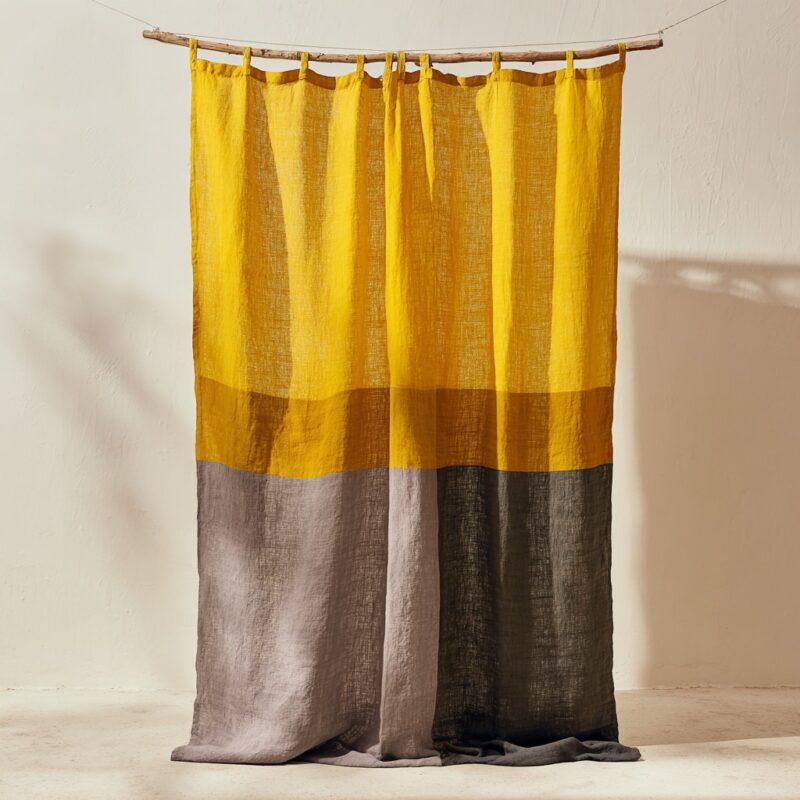
Striped Linen Curtains
$49.99
Tailored Bed Skirt
$49.99
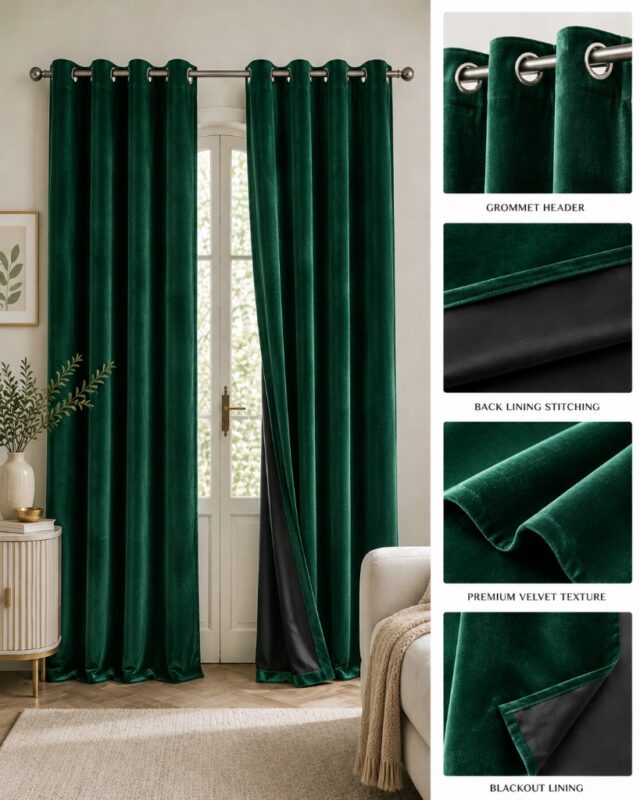
Velvet Blackout Curtains
$49.99
Reviews
There are no reviews yet.