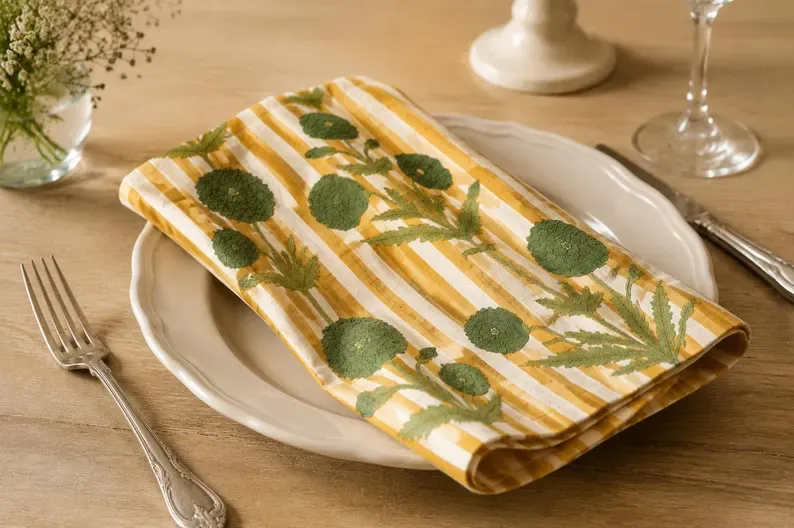
Linen Kitchen Towels
$49.99
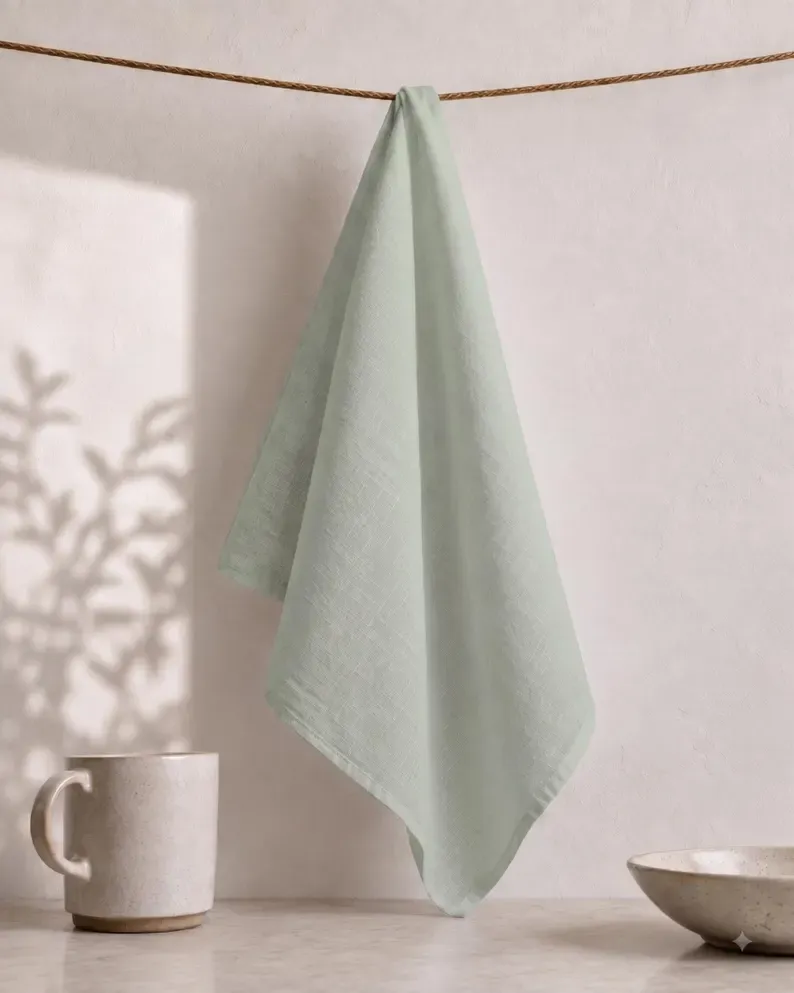
Linen kitchen towels cut from 100% flax grown in Normandy, stonewashed with volcanic pumice for 14 hours before hemming — 160 gsm plain weave, lint-free. Our linen kitchen towels dry glassware without shedding, which cotton cannot do. Why Professional Kitchens Reach for Linen There’s a reason sommeliers polish wine glasses with linen, not cotton — linen fibers don’t shed. Cotton terry absorbs fast but deposits tiny loops of lint on every surface it touches. A linen kitchen towel absorbs steadily (up to 20 % of its own weight in moisture), releases that moisture to the air quickly, and leaves glassware, countertops, and cookware streak-free. The Flax Behind the Fabric Our linen starts as flax grown in Normandy’s maritime climate, where consistent rainfall and cool temperatures produce the world’s finest long-line fibers. These fibers are wet-spun into yarn and woven in a dense plain weave at 160 GSM — heavier than a decorative tea towel, lighter than a bath towel, and precisely calibrated for kitchen duty. Stonewashed Before It Ships Raw linen can feel stiff and papery for the first dozen washes. We skip that break-in period by tumbling each towel with natural volcanic pumice stones for 14 hours at the mill. The result: a towel that arrives supple, absorbent, and ready to work from the first use. No chemical softeners, no silicone coatings — just mechanical softening that won’t wash out. Construction Details Each towel measures 20 × 28 inches — the standard tea-towel proportion that drapes over a shoulder, tucks into an apron waistband, or hangs from an oven-door handle without dragging on the floor. Edges are finished with double-folded mitered corners and a dense topstitch at 12 stitches per inch. A reinforced 3-inch fabric loop at one corner hangs flat on any hook or towel bar. Linen Gets Better, Not Worse Unlike cotton, which peaks at softness after 5–10 washes and then begins to thin and pill, linen fibers strengthen with repeated laundering. At 50 washes, your linen dish towel will be softer than at 1 wash — and the tensile strength of each fiber will have actually increased. A well-cared-for linen towel lasts 8–10 years in daily kitchen rotation. Linen kitchen towel size guide SizeUse 20 × 28 in.Standard tea-towel proportion — oven handle, apron, shoulder Weight160 gsm plain weave Absorption~20% of own weight LintEffectively zero How to care for your linen kitchen towels Machine-wash warm (40 °C / 105 °F), tumble-dry low Skip fabric softener — coats fibers and reduces absorbency Iron while slightly damp on the linen setting if you want a crisp finish Wrinkles are texture, not a defect Frequently asked questions Why linen kitchen towels for glassware? Linen doesn’t shed. Cotton terry deposits lint on every surface it dries; linen fibers are long-line and structurally locked, so glassware comes out streak-free. How much moisture does a linen kitchen towel absorb? Up to 20% of its own dry weight. Slower initial absorption than cotton terry, but faster release — so the towel dries between uses instead of staying damp. Do linen kitchen towels get softer with washing? Yes. Linen strengthens and softens with repeated laundering, where cotton peaks at wash 10 and then thins. A linen towel at 50 washes is softer than at wash 1. How long should a linen kitchen towel last? 8–10 years in daily kitchen rotation. Longer if the fabric softener stays out. Complete the kitchen linen set Prefer a heavier weave for spills? See our Cotton Kitchen Towels in herringbone twill. For the flat-weave tea-towel format, browse Tea Towels. For quick-dry hollows, try Waffle Kitchen Towels.
| Fabric | Linen |
|---|
| Size | UK | US | EU | Japan |
| XS | 6 - 8 | 4 | 34 | 7 |
| S | 8 -10 | 6 | 36 | 9 |
| M | 10 - 12 | 8 | 38 | 11 |
| L | 12 - 14 | 10 | 40 | 13 |
| XL | 14 - 16 | 12 | 42 | 15 |
| XXL | 16 - 28 | 14 | 44 | 17 |

Reviews
There are no reviews yet.